Hüseyin Sermet Public Works Engineer Archive
|
Koç University Suna Kıraç Library Archives presents a highly valuable collection that sheds light on the history of engineering in twentieth-century Turkey: The Hüseyin Sermet Public Works Engineer Collection.
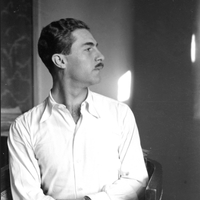
Born in 1907, Hüseyin E. Sermet began his engineering education at Robert College and graduated in 1929 from the Civil Engineering Department of Purdue University in the United States. Upon returning to Turkey, he worked at the Ministry of Public Works (Nafıa Vekâleti) in the Highways and Bridges Department, contributing to the early Republican period’s transportation and infrastructure projects.
In 1938, he served as a project engineer in the Turkish Pavilion at the 1939 New York World’s Fair, designed by the renowned architect Sedad Hakkı Eldem, gaining valuable international experience. After working as a chief project engineer at Preload Corp. in New York in 1940, he returned to Turkey, where he began his career at Koç Ticaret AŞ in 1947 and continued until his retirement in 1975 as the General Manager of Otokoç AŞ.
Content of the Collection
Reflecting both Sermet’s professional and personal life, this collection comprises more than 900 photographs.
It includes original images of the construction process of the Turkish Pavilion and the atmosphere of the fair; rare photographs documenting the construction of reinforced concrete and steel bridges across Anatolia in the 1930s; scenes from bridge construction sites; working environments of engineers and laborers; and visuals illustrating the technical possibilities of the period.
This collection is not only an engineering archive but also a visual testimony to Turkey’s modernization story. While the infrastructure projects of the 1930s reflect the Republic’s vision of development, the 1939 New York World’s Fair highlights Turkey’s international representation at the time.
For researchers, students, and history enthusiasts, the collection offers a unique resource in both technical and cultural terms.
|